Philomena’s Law Protects UK Survivors from Welfare Loss

Survivors of Ireland’s Mother and Baby homes living in the UK are no longer at risk of losing their state welfare support upon receiving compensation from the Irish government. The implementation of Philomena’s Law resolves a long-standing financial dilemma that previously forced survivors to choose between redress for institutional abuse and maintaining vital daily assistance.
Survivors of Ireland’s Mother and Baby homes residing in Britain will no longer face the loss of essential welfare benefits or social care support upon receiving compensation from the Irish government. The implementation of Philomena’s Law, which came into force last week, resolves a long-standing financial dilemma that previously forced survivors to choose between accepting redress for institutional abuse and maintaining their access to state-funded assistance.
The legislation ensures that compensation payments are ringfenced, meaning they do not count as income for the purpose of calculating welfare entitlements. This provision marks the first time that compensation from a foreign government has been protected in this manner. Prior to this change, survivors faced a stark choice: accept financial acknowledgment for past trauma or risk losing vital support systems that many relied on for daily living.
The law is named after Philomena Lee, an Irish woman who was compelled to surrender her son for adoption after being placed in a Mother and Baby home in Roscrea as a teenager. Her decades-long campaign to find her child gained international prominence following the release of the 2013 film "Philomena," starring Dame Judi Dench and Steve Coogan. The movie brought widespread attention to the treatment of unmarried mothers and their children within Ireland’s religious institutions.
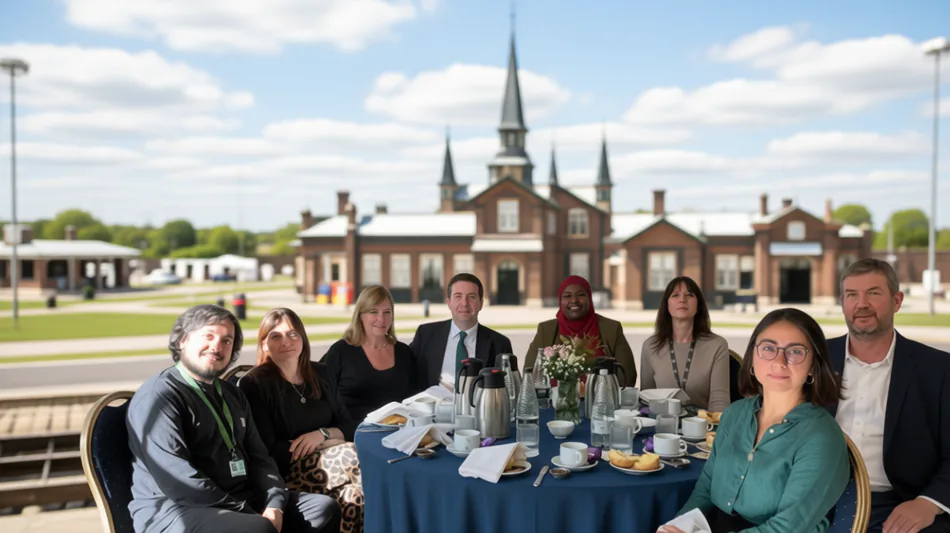
Key figures behind the legislative campaign gathered at the London Irish Centre in Camden Square on Friday for a roundtable discussion to mark the law's enactment. Jane Libberton, Philomena Lee’s daughter, attended the event to discuss the impact of her mother’s narrative on public awareness and policy change.
Libberton attributed the widespread resonance of her mother’s story to her character. "The reason that my mum’s story resonated with so many people is because she is kind and forgiving," Libberton said. "She is not bitter, angry or twisted, and I think that really made a big difference to a lot of people, which has led people to understand now about Mother and Baby homes."
She noted that her mother initially viewed her experiences as ordinary rather than extraordinary. "Initially she said she didn’t have a story to tell, it was just her life and of course it happened to so many people she just thought it was kind of normal," Libberton added.
Liam Conlon MP, who championed the legislation in Parliament, emphasized the role of public empathy in driving the legal change. He explained that while the concept of Mother and Baby homes may be unfamiliar to some in Britain, the film served as a crucial educational tool.
"It was named Philomena’s Law for a reason," Conlon said. "It’s quite difficult to explain to your average person in Britain what a Mother and Baby home is but many people have seen the film and connected with your mum and her story. The courage she had to come forward and share that, as it is very hard for survivors to do that. Her story was an essential part of our campaign."
Conlon highlighted the long-term implications of the law for survivors who have historically been denied dignity. "This has shown people a kindness and respect they have been denied for most of their lives, and they will now have that for a lot of them at the end of their lives," he stated.
The London Irish Centre played a pivotal role in both the campaigning effort and the ongoing support of survivors through its Survivors Integrated service. Sean Kaluarachchi, a survivor information adviser at the centre, noted that the application process had previously been isolating for many.
"People have said to me it’s a very lonely process to apply to the Mother and Baby scheme without the support," Kaluarachchi said. "Before this all passed there were so many people that were not ready to accept and weren’t ready to apply in the first instance. Now there is a resounding sigh of relief for all survivors."
Katie Doyle, manager of the Survivors Integrated service, pointed out that survivors who had emigrated from Ireland had often been overlooked in previous discussions regarding institutional abuse. She called for continued attention to this demographic.
"Historically, people who have left Ireland have been forgotten in this," Doyle said. "These are real-life situations that people are dealing with on a day-to-day basis. What I want to see next is the consideration. Open the conversation wider and think about the survivors that have left Ireland."
The new legal framework aims to ensure that financial compensation does not inadvertently penalize survivors who depend on state support, addressing a critical gap in the redress process for those living outside of Ireland.
X.Schmitz--FFMTZ