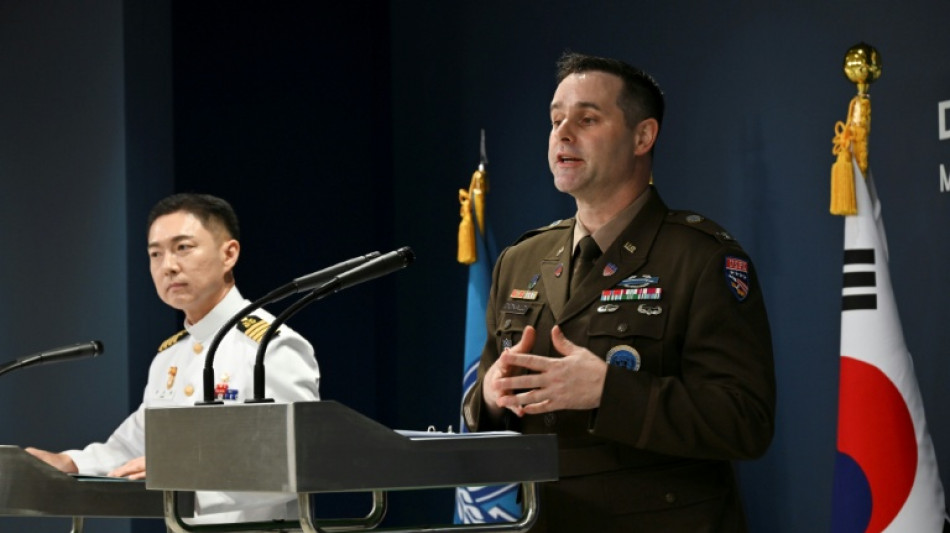
US, South Korea to drill for new threats from North / Photo: SONG Kyung-Seok - POOL/AFP

South Korean and US forces will hold major joint drills next week simulating combat against North Korean troops battle-hardened by deployment in the Russia-Ukraine war, an exercise spokesman said Monday.
The "Ulchi Freedom Shield" exercise is a regular summer fixture for South Korea's armed forces and their US allies, designed to steel them for defence against the nuclear-armed North.
Pyongyang has always been angered by the drills, decrying them as dress rehearsals for an invasion.
This year's 11-day exercise starting on August 17 will account for the changing "character of warfare", said Colonel Ryan Donald, spokesman for the US and South Korean Combined Forces Command.
"DPRK soldiers have deployed and fought in Ukraine," he told reporters, using an acronym for the North's official name, the Democratic People's Republic of Korea.
"They've taken those lessons they learned there and brought them back to North Korea," he said. "That changes the DPRK capability, and our training accounts for that threat."
The exercise -- enlisting 18,000 South Korean troops and counterparts from the US contingent of 28,500 in the country -- will have a heightened focus on drone warfare, GPS disruption and the role of cyber attacks, he said.
North Korea has deepened its ties with Russia since the Kremlin commanded the full-scale invasion of Ukraine in 2022.
Pyongyang has sent troops and munitions for Moscow's faltering war in exchange for financial support, food, energy and military technology, according to analysts.
Its soldiers are also gaining experience of modern-day battlefields.
Ukrainian President Volodymyr Zelensky said in a social media message on Sunday that "a decision has been made for 30,000 to 50,000 North Koreans to be deployed on the territory of Russia".
"They are studying this war," he said.
"If we are talking about crises and escalation in another region –- in the Pacific –- which could pose a threat to other Asian countries, then North Korea will certainly gain experience in modern warfare under Russia."
South Korea's dovish President Lee Jae Myung has reversed the stance of his hawkish predecessor since taking power in June 2025, offering Pyongyang talks without preconditions.
But the leadership of North Korea has yet to respond to his repeated offers.
The two Koreas remain technically at war because their 1950-53 war, triggered by a North Korean attack, ended with an armistice rather than a peace treaty.
I.Lang--FFMTZ