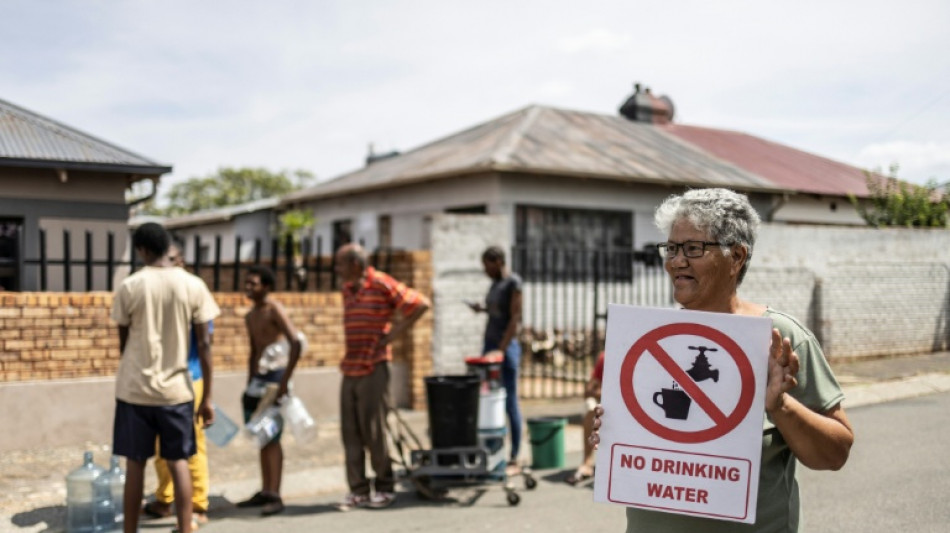
Tap water no longer drinkable near South Africa capital / Photo: Roberta Ciuccio - AFP/File
Residents of neighbourhoods in South Africa's Tshwane municipality, which includes the capital Pretoria, have been told to stop drinking tap water after waterborne pathogens led hundreds of people to seek medical treatment, the city said Tuesday.
Africa's most industrialised economy is grappling with chronic water woes as decades of infrastructure decay and poor maintenance push the system to the brink, making water a hot-button issue ahead of next month's local government elections.
Tests found high levels of E. coli bacteria in water from the Bronkhorstspruit water treatment plant supplying the affected areas, the city said.
Stool samples from patients also contained norovirus, campylobacter and shigella, which can cause stomach cramps and diarrhoea.
E. coli lives in the intestines of humans and animals, and its presence in drinking water can signal contamination by sewage or other waste.
The water could only be used to flush the toilet, the city of Tshwane said.
The Bronkhorstspruit plant went without chlorination for three weeks because of problems with its chlorine supplier, the government said.
Between October 7 and 18, more than 400 people had been taken ill, most of them children under four.
No deaths have been reported while new cases peaked at 72 on October 13, according to government records.
"No cholera bacteria were found in the sampled stools," the health department said in a statement on Monday.
President Cyril Ramaphosa said on Tuesday the national government had intervened and hoped to resolve the crisis within days.
"We are very sorry that it has resulted in the challenge of gastroenteritis," he said, adding: "We cannot afford a situation where our people are drawn to illness because of our inability to treat water properly."
In 2023, the same region was hit with a cholera outbreak that claimed some 30 lives.
A.Seidel--FFMTZ