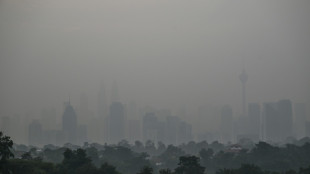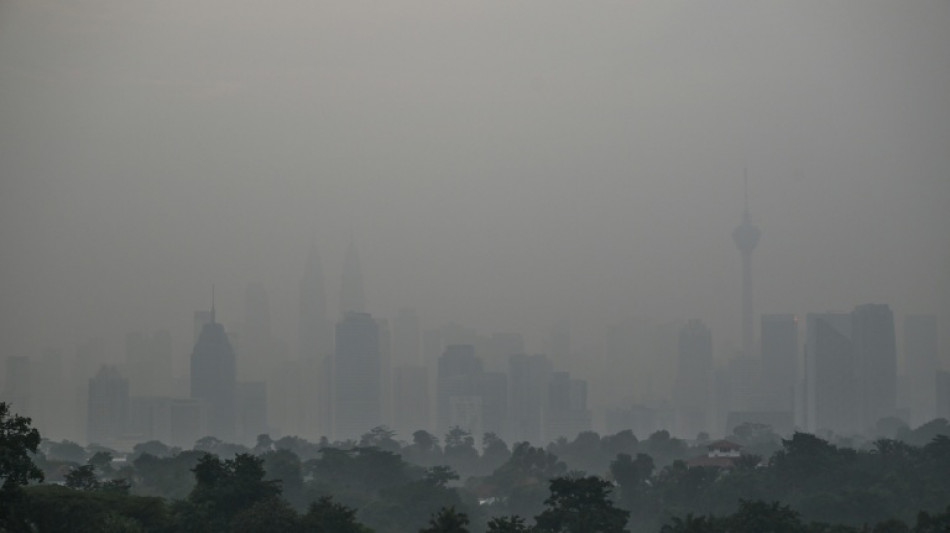
Haze triggers highest-level alert in parts of Southeast Asia / Photo: Jam STA ROSA - AFP
Fires in Indonesia that have sent toxic smoke and disrupted daily life across Southeast Asia have triggered the highest-level alert by the regional bloc's meteorological monitor.
The months-long pollution spell has closed schools, fuelled a surge in respiratory conditions and restricted outdoor activities in Indonesia, Malaysia, Singapore and East Timor.
"This thing needs to stop," Zul Hafiz, a 39-year-old teacher cycling from the Malaysian city of Shah Alam to the capital, told AFP on Saturday, calling on the Association of Southeast Asian Nations (ASEAN) to take action.
The 11-country organisation's ASEAN Specialised Meteorological Centre (ASMC) said in a notice on its website on Friday that it had activated "Alert Level 3 for the Southern ASEAN region" -- the highest rung of a four-tiered alert system.
The alert level is triggered when there is a "high risk of severe transboundary haze in the region" and is reserved for widespread moderate to dense smoke haze, observed over two or more consecutive days.
The ASMC has already issued two Level 3 alerts this year, according to its website.
Singapore ranked second on IQAir's live ranking of the world's most polluted major cities behind Baghdad on Saturday, with Kuala Lumpur third. All readings showed "very hazardous" levels."
- 'Irresponsible behaviour' -
Indonesia said Saturday it had been using dry ice at one of South Sumatra province's main airports in an attempt to disperse the haze.
The country's national disaster mitigation agency said that 2.4 tonnes of dry ice were dispersed by plane.
"The smoke not only reduces visibility and disrupts aircraft operations, but also affects residents' health," the agency warned.
The haze has disrupted life across Southeast Asia, sparking fresh calls for action from those affected.
"It's a bit unfair on Malaysia because of the irresponsible behaviour of our neighbouring country," Khairul Azhar, a 33-year-old bank officer told AFP in Kuala Lumpur.
"This is affecting our weekend routine -- not just for us but many Malaysians," he said.
In Indonesia's Palangkaraya -- part of the epicentre of the fires where thick haze turned the skies into apocalyptic shades of yellow and orange -- residents said they were suffering from its effects on Saturday.
"The haze has a big impact on us, especially on health and the economy, with our income decreasing," said Marzuki, a 38-year-old mechanic who like many in Indonesia, goes by only one name.
"Right now the economy is already very difficult, and the haze just makes it worse," he told AFP, adding that this year's situation was worse than even previous major bouts of haze in 2015.
"Hopefully it rains soon, the fires go out, and the smoke disappears so that activities can return to normal and it’s easier to earn a living again," he said.
- 'What else to do?' -
Joko, 51, a construction worker, said he had no choice but to keep on working or he would lose out on income.
"The thick smoke, when inhaled, makes it hard to breathe and stings the eyes, but what else can you do? This is how we earn a living," Joko said, explaining he had no fixed income and relied on daily wage jobs.
In East Timor, unhealthy air pollution persisted on Saturday, including in the capital Dili, according to IQAir.
Authorities warned that the situation may worsen on Saturday and schools were closed.
Singapore said Friday it would issue warnings to seven companies in Indonesia it identified as responsible for the fires.
Philippines foreign department spokesman for ASEAN issues, Dominic Xavier Imperial, said Friday that the haze would be discussed at upcoming meetings ahead of a November ASEAN summit in Manila.
burs-jhe/ceg
V.Lange--FFMTZ